A 1,024Wh power station gives an estimated 7.6 hours for a 100W TV plus 15W of networking equipment, using an 85% planning allowance. Your own TV and connected devices may draw more or less power.
How to measure your TV and Wi-Fi power draw
Measure the equipment you intend to keep running together: the TV, router, modem or fiber terminal, and any streaming box or antenna amplifier. Add their watts to get the total load.
Measure during normal use. With a plug-in watt meter, check the TV while watching the content you normally watch, at your usual brightness. Check the networking equipment too, or measure the combined load through a suitable power strip within its rating.
Watch for changes. A TV's power draw can change with brightness and picture settings. Take several readings instead of relying on a single low reading.
Use labels as a starting point. A label or power adapter rating may show a maximum rather than the actual running load. A measurement gives a better input for your estimate.
Understand watts and watt-hours
Watts (W) describe how much power your devices use. Watt-hours (Wh) describe battery capacity. A 1,800W output rating does not mean the battery lasts 1,800 hours; runtime depends on capacity and the connected load.
Estimated hours = battery Wh × 0.85 ÷ total device watts. The 85% value is our simplified planning allowance, not a measured efficiency for every power station. Inverter overhead, battery age, temperature and power settings can change the result. Keep reserve for a longer outage.
Try the runtime calculator
Enter battery capacity and average device load. This planning estimate uses 85% usable efficiency.
Estimated runtime: 7.6 hours
Actual runtime varies with conversion losses, cycling loads, temperature and battery condition.
TV + Wi-Fi runtime examples
These are illustrative loads, not typical wattage claims or measured product tests. Use your own measured total in the calculator. Both capacity columns use the same 85% planning allowance.
Estimated hours with continuous AC use and no recharging
Example setup
Total load
500Wh battery
1,024Wh battery
60W TV + 15W networking
75W
5.7 hours
11.6 hours
100W TV + 15W networking
115W
3.7 hours
7.6 hours
150W TV + 15W networking
165W
2.6 hours
5.3 hours
200W TV + 30W networking
230W
1.8 hours
3.8 hours
Worked example: six hours of TV and Wi-Fi
Suppose your TV measures 100W and your networking equipment measures 15W. The combined load is 115W. For six hours, the devices use 115 × 6 = 690Wh. Allowing for our planning efficiency gives 690 ÷ 0.85 ≈ 812Wh of battery capacity before extra reserve.
For a 1,024Wh battery, 1,024 × 0.85 ÷ 115 ≈ 7.6 hours. That clears a six-hour target on this estimate, but it does not promise six hours in every real setup. Add other devices to the load and leave room for uncertainty before buying.
Will powering the router keep the internet working?
It keeps your own equipment powered, but does not guarantee internet access. Your modem or fiber terminal may also need backup power, and the provider's network must remain available. Download entertainment beforehand if you need an option that does not depend on an internet connection.
What if the station turns off at a low load?
Check your model's manual for AC timeout or energy-saving settings. Some models can shut down under a small load; verify the settings for your equipment before relying on it during an outage.
Guide and examples updated October 10, 2026. Calculations are planning estimates; no hands-on runtime testing is claimed.
Choose by runtime
Which power station fits your TV?
Start with how many hours you need, then compare battery capacity. Include your streaming box, router and any other devices in the total watts above.
For 6 hours at 115W, plan for at least 812Wh before adding extra reserve.
This uses the same 85% planning allowance as the calculator. Extra reserve helps; these estimates are not measured product tests. A shorter TV session may need much less capacity than either option below.
Affiliate disclosure: TLNetwork may earn a commission if you buy through these links, at no additional cost to you.
About 1 kWh · Power station only
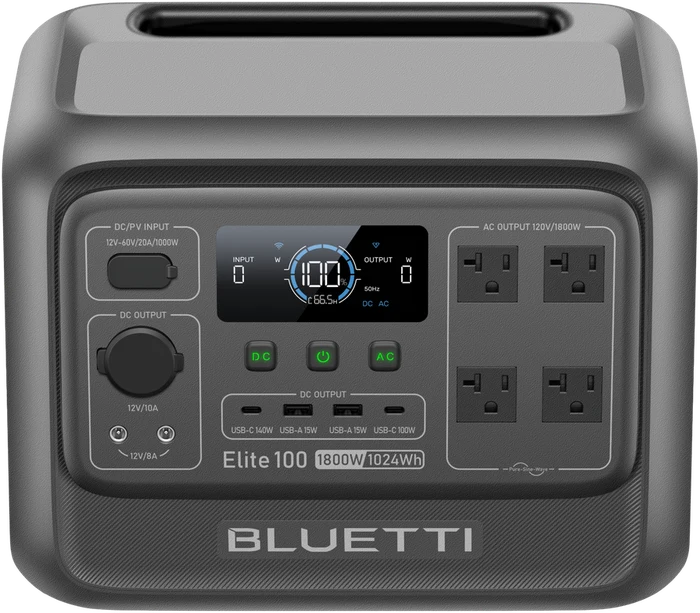
BLUETTI Elite 100 V2
1,024Wh battery · 1,800W AC output
A capacity to consider for a longer TV session. A smaller station may be enough for a shorter viewing goal.
$499 at the October 8, 2026 check. The selected standalone model had an enabled Add to Cart button. Solar panels are not included. Confirm current price and availability before buying.
For your 115W setup, this model estimates 7.6 hours against your 6-hour goal. It meets the goal on this estimate; allow extra reserve.
Coupon: ELITE5OFF — 5% off. In a checkout checked October 8, 2026, the code reduced the $499 standalone Elite 100 V2 to $474.05 before tax, saving $24.95. Enter the code at checkout and confirm your final price; offer eligibility, price and availability can change.
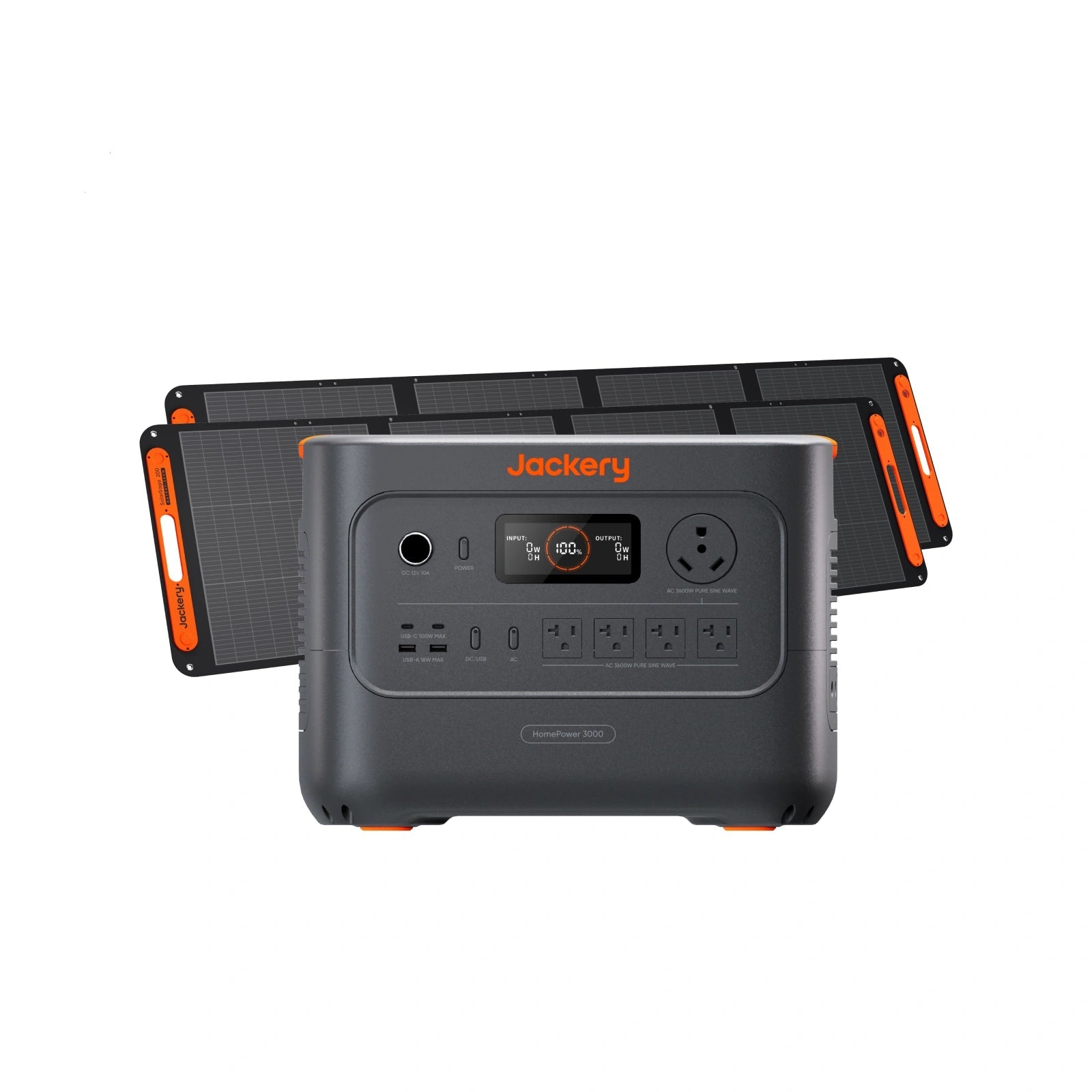
Consider this larger system if you need longer runtime or plan to power additional devices. It may be more capacity and expense than you need for a TV alone.
Available at the October 6 check. The linked listing offers solar-panel bundles. Compare the included panels and total price before choosing.
For your 115W setup, this model estimates 22.7 hours against your 6-hour goal. It meets the goal on this estimate; allow extra reserve.
Measure the combined load. Battery capacity in Wh determines estimated runtime; output in W determines how much load it can supply at once.
Check the exact package. A power station and a solar-panel bundle have different prices and contents. Solar panels are optional when you can recharge from an outlet.
Read current shipping, warranty and return terms. Stock and prices can change. Match the outlet voltage to your TV.
BLUETTI specifications and price checked October 8, 2026 against BLUETTI; Jackery specifications checked October 6 against Jackery. Runtime estimates are TLNetwork calculations using the stated battery capacity. No hands-on testing or best-product ranking is claimed.
Related power-planning resources
Continue with the Power Guides & Resources hub for related runtime, appliance-sizing and solar-planning articles.